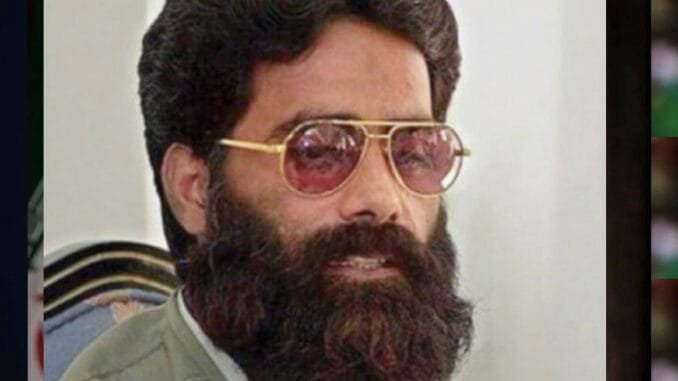
Ilyas Kashmiri biography covers the Pakistani militant commander, his family, 313 Brigade leadership, Al-Qaeda ties, and death in a 2011 US drone strike.
Who is Ilyas Kashmiri?
Ilyas Kashmiri biography tells the story of one of the most dangerous militant commanders in modern history. Born Muhammad Ilyas Kashmiri on 10 February 1964 in Bhimber, Azad Kashmir, Pakistan, he rose from humble origins to become a senior Al-Qaeda operational commander before his death in a US drone strike on 3 June 2011.
Kashmiri began his career as a trainer in the Pakistani Army’s Special Services Group before transitioning to militant activities during the Soviet-Afghan War. He lost an eye and an index finger whilst training Afghan mujahideen in explosives. His military expertise made him invaluable to jihadist organisations, and he eventually founded the notorious 313 Brigade.
CNN famously called him the “most dangerous man on Earth,” whilst NBC News reported that US officials considered him a potential successor to Osama bin Laden. He was linked to numerous high-profile attacks, including the 2008 Mumbai attacks and the assassination of Pakistani military officials. The United States designated him a global terrorist in August 2010, placing a $5 million bounty on his head.
Quick Facts Table
| Attribute | Details |
|---|---|
| Full Name | Muhammad Ilyas Kashmiri |
| Date of Birth | 10 February 1964 |
| Date of Death | 3 June 2011 |
| Age at Death | 47 years old |
| Place of Birth | Bhimber, Azad Kashmir, Pakistan |
| Nationality | Pakistani |
| Height | Approximately 6 feet (1.83 metres) |
| Physical Features | One eye, missing index finger |
| Profession | Militant Commander |
| Affiliations | Harkat-ul-Jihad al-Islami, 313 Brigade, Al-Qaeda |
| Wife | Name undisclosed |
| Children | Khalid Ilyas, Maryam, Osama, Huzaifa |
| Home Village | Thathi, Bhimber District |
| Cause of Death | US drone strike, South Waziristan |
Early Life and Background
Ilyas Kashmiri was born in the Samahani Valley of Bhimber District in Azad Kashmir, a region administered by Pakistan near the Line of Control with India. He grew up in modest circumstances shaped by the Kashmir conflict.
His schoolteacher, Mohammed Razaq, later described the young Kashmiri as “an obedient student, a good athlete and an excellent debater” with a keen interest in politics. The family lived in the village of Thathi, an arduous six-hour drive from Islamabad in the Himalayan foothills. His elder brother Chaudhry Asghar remained in the village throughout his brother’s militant career.
Educational Background
Kashmiri pursued limited formal education before turning to militant activities. He spent one year studying communications at Allama Iqbal Open University, one of Pakistan’s major distance learning institutions.
He also studied at Jamia Uloom-ul-Islamia, a madrasa in Karachi known for producing Islamist militants. It was there that Kashmiri formed connections with two fellow students who would become the nucleus of Harkat-ul-Jihad al-Islami, Pakistan’s first major jihadist organisation.
Later in life, Kashmiri built his own madrasa and mosque in his home village of Thathi in Bhimber District. His family lived next to these religious buildings, though Kashmiri himself rarely visited after becoming fully committed to militant activities.
Military and Militant Career
Kashmiri received training with Pakistan’s elite Special Services Group before the Soviet-Afghan War. During the 1980s, he trained Afghan mujahideen in explosives in Miranshah on behalf of Pakistani intelligence. He lost an eye and an index finger during combat against Soviet forces.
After the Soviet withdrawal in 1989, Kashmiri joined Harkat-ul-Jihad al-Islami in 1991, focusing on Kashmir. Disagreements with HuJI leader Qari Saifullah Akhtar led him to establish the 313 Brigade, a specialised unit that became known for high-profile attacks.
In the mid-1990s, Indian forces captured Kashmiri near Poonch. He spent two years in Indian prison before escaping. In 1994, he collaborated with Omar Saeed Sheikh in Operation al-Hadeed, kidnapping Western tourists near New Delhi to secure the release of imprisoned militants.
Militant Career Timeline
| Year | Event | Significance |
|---|---|---|
| 1980s | Soviet-Afghan War | Trained mujahideen in explosives |
| 1991 | Joined HuJI | Began Kashmir militant operations |
| Mid-1990s | Indian imprisonment | Escaped after two years |
| 2000 | Beheading incident | Rewarded by Gen. Musharraf |
| 2003 | ISI detention | Suspected in Musharraf assassination plots |
| 2005 | Moved to Waziristan | Shifted operations to Afghan border |
| 2008 | Mumbai attacks | Allegedly proposed attack plan |
| 2010 | US terrorist designation | $5 million bounty placed |
| 2011 | Death | Killed in US drone strike |
Rise to Global Notoriety
Kashmiri gained international notoriety in February 2000 following a retaliatory raid against Indian forces. After Indian commandos allegedly killed 14 Pakistani civilians near the Line of Control, Kashmiri led a cross-border operation that captured and beheaded an Indian Army soldier named Bhausaheb Maruti Talekar.
He presented the severed head to then-Army Chief General Pervez Musharraf, who reportedly rewarded him with 100,000 Pakistani rupees. Pakistani newspapers published photographs of Kashmiri holding the head, cementing his reputation for ruthlessness.
Following the September 2001 attacks, Kashmiri’s relationship with Pakistani intelligence deteriorated. The ISI detained him multiple times in 2003 for suspected involvement in assassination attempts against President Musharraf and links to Al-Qaeda.
Personal Life and Family
Kashmiri married and had four children: eldest son Khalid Ilyas, daughter Maryam, and sons Osama and Huzaifa. His wife’s name was never publicly disclosed. The family lived in a humble mud house in Thathi, adjacent to the madrasa and mosque Kashmiri had built.
Despite his notoriety, Kashmiri reportedly never sent money to his family, leaving them in poverty. His elder brother Chaudhry Asghar bore the burden of caring for Kashmiri’s wife and children. According to Asghar, the children sometimes went to school hungry.
When Asghar urged Kashmiri to abandon militant activities, he refused. Kashmiri reportedly told his children, “I don’t care if you live or die. I must continue my mission.” He had not visited his family since 2005.
Linked Attacks and Activities
Kashmiri was connected to numerous attacks across South Asia. He allegedly proposed the 2008 Mumbai attacks to Al-Qaeda leadership as a strategy to provoke war between India and Pakistan. The plan was approved and executed by Lashkar-e-Taiba operatives.
In 2008, he orchestrated the assassination of Major General Amir Faisal Alvi, a former Special Services Group commander. The following year, he was linked to attacks on ISI offices in Lahore and the assault on Pakistan Army’s General Headquarters in Rawalpindi.
US authorities connected Kashmiri to transnational terrorist plots through operatives David Coleman Headley and Tahawwur Hussain Rana. He was also suspected of involvement in the December 2009 suicide attack on CIA’s Camp Chapman in Afghanistan.
Death and Legacy
On 3 June 2011, a US drone strike targeted a compound in South Waziristan where Kashmiri and his associates were reportedly taking tea in an apple orchard. Nine militants were killed in the attack, including Kashmiri.
The 313 Brigade confirmed his death the following day, threatening revenge against the United States. In March 2012, Al-Qaeda’s Pakistan spokesman officially confirmed Kashmiri’s death. The United Nations Security Council formally listed him as “reportedly deceased” in May 2012.
His character inspired the fictional “Major Iqbal” portrayed by Arjun Rampal in the Indian spy film Dhurandhar (2025).
Final Thoughts
Ilyas Kashmiri’s life exemplifies the trajectory of Pakistani jihadism from state-sponsored proxy warfare to transnational terrorism. His journey from military trainer to Al-Qaeda commander reflected broader shifts in regional militant networks following the September 2001 attacks.
His military training, strategic acumen, and willingness to carry out brutal operations made him one of the most effective guerrilla commanders of his era. Intelligence agencies across three continents tracked his activities, recognising him as a threat capable of executing complex transnational attacks.
Kashmiri’s death represented a significant blow to Al-Qaeda’s operational capacity in South Asia, though his legacy endured through the networks he built and tactics he pioneered.
FAQs About Ilyas Kashmiri
How did Ilyas Kashmiri die?
Ilyas Kashmiri was killed on 3 June 2011 in a US drone strike on a compound in South Waziristan, Pakistan. He was reportedly taking tea with associates in an apple orchard when missiles struck the location.
Was Ilyas Kashmiri linked to the Mumbai attacks?
Yes, Kashmiri allegedly proposed the 2008 Mumbai attacks to Al-Qaeda leadership as a strategy to provoke India-Pakistan conflict. The plan was approved and executed by Lashkar-e-Taiba operatives coordinated through David Coleman Headley.
Why was Ilyas Kashmiri called the most dangerous man on Earth?
CNN gave him this title due to his military expertise, operational success, and ability to plan complex transnational attacks. US intelligence considered him one of Al-Qaeda’s most effective commanders and a potential successor to Osama bin Laden.
What was the 313 Brigade?
The 313 Brigade was a militant unit founded by Ilyas Kashmiri within Harkat-ul-Jihad al-Islami after disagreements with HuJI leadership. It specialised in high-profile attacks and became closely integrated with Al-Qaeda’s operations.
Did Ilyas Kashmiri have a family?
Yes, Kashmiri had a wife and four children who lived in Thathi village, Azad Kashmir. However, he reportedly abandoned them to pursue militant activities and never sent money to support them.
How much was the bounty on Ilyas Kashmiri?
The United States designated Kashmiri a global terrorist in August 2010 and placed a $5 million bounty on his head through the Rewards for Justice programme.
Leave a Reply