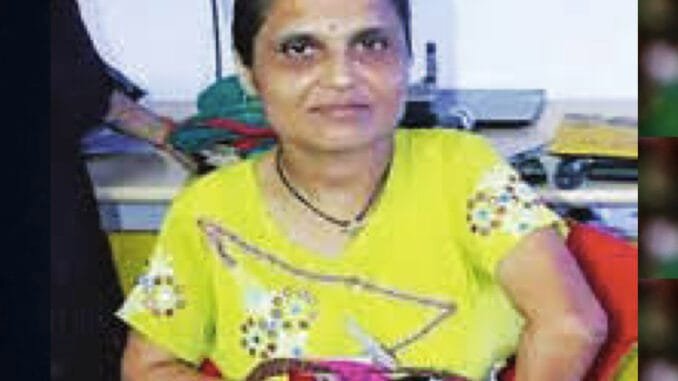
Ila Sachani biography reveals the inspiring story of a Gujarat artist who creates Kathiawar embroidery using her feet. Learn about her awards and journey.
Who is Ila Sachani?
Ila Sachani biography tells the extraordinary story of a differently-abled Indian artist who transformed physical limitations into artistic triumph. Born in Amreli, Gujarat, into a farmer’s family, Ila came into the world with a condition that left her hands hanging loose by her sides. Despite this significant challenge, she has become one of India’s most celebrated embroidery artists.
Ila currently resides in Moti Vavdi village in Bhavnagar, Gujarat, where she creates stunning Kathiawar embroidery using her feet. Her tiny room overflows with vibrant cushions, bedcovers, pillows, and decorative items featuring intricate traditional designs.
What makes Ila’s story remarkable is her refusal to accept limitations. With unwavering family support, she taught herself to perform daily tasks using her feet, from eating and combing her hair to threading needles and creating delicate embroidery patterns.
Her journey from a farmer’s daughter to a nationally recognised artist and recipient of the President’s Medal exemplifies the Indian spirit of perseverance. Today, Ila conducts training workshops, empowering other women to develop skills that lead to independence.
Quick Facts Table
| Attribute | Details |
|---|---|
| Full Name | Ila Sachani |
| Place of Birth | Amreli, Gujarat, India |
| Current Residence | Moti Vavdi village, Bhavnagar, Gujarat |
| Nationality | Indian |
| State of Origin | Gujarat |
| Family Background | Farmer’s family |
| Profession | Embroidery Artist, Trainer |
| Art Form | Kathiawar Embroidery |
| Unique Skill | Creates embroidery using her feet |
| Father | Farmer |
| Mother | Homemaker, skilled in Kathiawar embroidery |
| Grandmother | Expert in Kathiawar embroidery |
| Siblings | Younger brother and sister |
| Notable Award | President’s Medal |
| State Recognition | State Award (2001) |
Early Life and Background
Ila Sachani was born in the quiet setting of Amreli, Gujarat, into a humble farming family. Unlike other children who drew figures in the sand or plucked wildflowers, Ila could only watch and wonder why she could not join them. She desperately wanted to hold a piece of chalk and draw pictures on a slate, but her hands simply would not cooperate.
Growing up with a physical disability in rural India could have meant a life of dependence. However, Ila’s family refused to accept this fate. Her mother and grandmother, both skilled practitioners of Kathiawar embroidery, became determined to help her overcome her challenges.
Her younger brother and sister played crucial roles in her development, assisting her in learning various tasks and embroidery styles. Her parents taught her to perform daily activities using her legs, including eating and combing her hair, establishing a foundation for the remarkable achievements that would follow.
Educational Background
While formal educational details about Ila Sachani remain limited, her real education came through traditional knowledge passed down through generations. Her mother and grandmother served as primary teachers, sharing the centuries-old art of Kathiawar embroidery.
Kathiawar embroidery is a highly skilled traditional craft from Gujarat’s Saurashtra region, characterised by vibrant colours, intricate patterns, and distinctive mirror work. Learning this art form typically takes years of dedicated practice. For Ila, mastering this craft using her feet required extraordinary patience and countless hours of practice.
Beyond Kathiawar embroidery, Ila’s curiosity drove her to learn multiple styles from across India, including Kachhi, Kashmiri, and Lucknawi techniques, each with unique characteristics and challenges.
Career Journey
Ila’s artistic journey began within her family home, where her mother and grandmother introduced her to Kathiawar embroidery. They discovered an innovative way for Ila to create patterns using her feet. Threading a needle presented the first major challenge, but through relentless practice, she became an expert at this delicate task at a remarkably young age.
Initially, Ila crafted designs for family and friends. They were awestruck by her talent and began sharing news of her creations. Soon, people throughout the village noticed her special skill, and admiration for her work spread throughout the community.
Word of Ila’s talent reached government officials in Surat. Moved by her story and impressed by her work quality, they displayed her embroidery at a state exhibition. People observed the beauty woven by her feet and readily purchased her creations.
Encouraged by this recognition, Ila participated in more exhibitions across Gujarat and nationally. In 2001, she received the prestigious State Award, and her achievements culminated in receiving the President’s Medal, one of India’s highest civilian honours for artistic achievement.
Career Timeline
| Year | Milestone | Significance |
|---|---|---|
| Early Years | Learned Kathiawar embroidery | Mastered threading needles using feet |
| Formative Period | Expanded to multiple styles | Learned Kachhi, Kashmiri, Lucknawi techniques |
| Recognition Phase | Work displayed at state exhibition | First public recognition in Surat |
| 2001 | Received State Award | Official government recognition |
| Later Years | Awarded President’s Medal | Highest civilian honour for artistry |
| Present | Conducts training workshops | Empowers other women through skill development |
Personal Life and Relationships
Ila Sachani maintains a relatively private personal life. What emerges clearly from her story is the profound importance of family bonds in her journey.
Her mother and grandmother were mentors who refused to let her disability define her future. Their decision to teach her Kathiawar embroidery, adapting methods to accommodate her using her feet, demonstrated extraordinary love and creativity. Her younger brother and sister helped her master various embroidery styles and assisted with daily tasks.
Today, Ila lives in Moti Vavdi village in Bhavnagar, Gujarat, where her small room serves as both studio and showroom. Visitors encounter a world of colour: cushions, bedcovers, and decorative items displaying her masterful work. Ila is described as a wonderful lady with a big smile, suggesting a person who has found peace and joy through her art.
Major Achievements
Ila Sachani’s achievements represent a triumph of human spirit over physical limitation and have earned recognition at the highest levels of Indian society.
Her most prestigious honour is the President’s Medal, awarded for exceptional artistry and the courage she demonstrated in overcoming challenges. This recognition placed her among India’s most celebrated artisans and brought national attention to her inspiring story.
The State Award she received in 2001 marked an important milestone, officially acknowledging her contributions to preserving traditional Gujarati craft. This recognition opened doors to national-level exhibitions.
Beyond awards, Ila’s impact includes numerous exhibitions where she has showcased her work across India. Each exhibition spread awareness about traditional embroidery whilst demonstrating that physical disabilities need not prevent artistic excellence.
Legacy and Impact
Ila Sachani’s legacy extends beyond personal achievements. She has become a symbol of possibility for differently-abled individuals throughout India, proving that determination can overcome seemingly impossible obstacles.
Her most significant ongoing contribution is training other women in embroidery. Through workshops, she teaches skills enabling financial independence whilst building confidence. Many women have learned to believe in themselves through her guidance.
Her story features in NCERT textbooks for Class 6 students under the title “Ila Sachani: Embroidering Dreams with Her Feet.” This inclusion ensures millions of Indian schoolchildren learn about her journey, inspiring a new generation to pursue their dreams regardless of obstacles.
Final Thoughts
Ila Sachani’s story represents the triumph of human determination over physical limitation. From a farmer’s daughter who could not use her hands to a nationally celebrated artist and recipient of the President’s Medal, her journey offers lessons for everyone facing challenges.
Her mastery of Kathiawar embroidery using her feet demonstrates that obstacles can become opportunities when met with courage. The intricate designs she creates, each stitch placed with toes rather than fingers, stand as testimony to what becomes possible when we refuse to accept limitations.
Today, as she continues creating beautiful embroidery and training other women, Ila Sachani remains a living inspiration. Her message is clear: where there is a will, there is always a way.
FAQs About Ila Sachani
Who is Ila Sachani?
Ila Sachani is a celebrated Indian embroidery artist from Gujarat who creates intricate Kathiawar embroidery designs using her feet. Born with a disability preventing normal hand use, she became a nationally recognised artist and President’s Medal recipient.
How does Ila Sachani do embroidery?
Ila Sachani creates embroidery using her feet instead of her hands. She mastered threading needles and executing intricate stitches using her toes, learning Kathiawar, Kachhi, Kashmiri, and Lucknawi styles through years of practice.
Where is Ila Sachani from?
Ila Sachani was born in Amreli, Gujarat, India. She currently resides in Moti Vavdi village in Bhavnagar district, where she creates and displays her embroidery work.
What awards has Ila Sachani received?
Ila Sachani received the State Award in 2001 and the President’s Medal. She has been honoured at numerous state and national-level exhibitions for her artistic excellence and determination.
What type of embroidery does Ila Sachani specialise in?
Ila specialises in Kathiawar embroidery, a traditional craft from Gujarat featuring bright colours, geometric patterns, and mirror work. She also mastered Kachhi, Kashmiri, and Lucknawi techniques.
Why is Ila Sachani’s story taught in schools?
Her story features in NCERT Class 6 textbooks because it exemplifies resilience and the power of art to overcome limitations. Her journey inspires students to pursue dreams regardless of obstacles.
Leave a Reply